


The Lighting Layers Every Entertaining Space Needs
A good entertaining space changes jobs throughout the night. Guests arrive, drinks are poured, food is served, and conversation settles in. One overhead fixture cannot serve each moment equally well.
Use four layers:
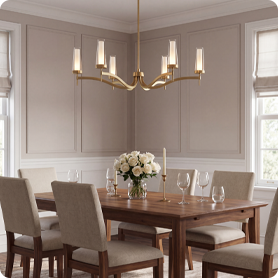
Ambient light for orientation

Task light for serving
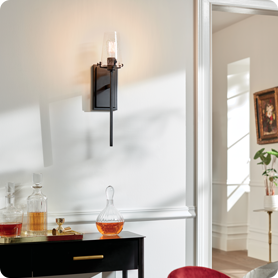
Face-level light for conversation
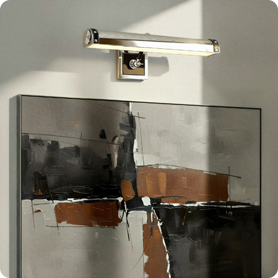
Accent light for atmosphere.
Put the layers on separate controls when possible.
Expert Tips
Keep serving surfaces bright enough to see food and glassware clearly.
Use shaded lamps or sconces near seating to flatter faces and reduce overhead shadows.
Dim decorative accents last; they help the room retain depth when the main light comes down.
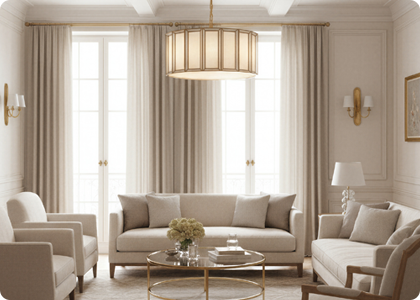
Design Around the Sequences of the Evening
At arrival, the entry and circulation path need clarity. During dinner, the table becomes the visual center while nearby surfaces stay gently lit. Afterward, lower the chandelier and let lamps and sconces carry conversation. Planning this sequence helps you decide which fixtures need independent controls.
Protect Sightlines & Conversation
A dining fixture should define the table without blocking guests across from one another. In living areas, avoid exposed bulbs at seated eye level. Place portable lamps near walls, consoles, or corners so cords remain outside the main flow of people.
Frequently Asked Questions
Q: What are the four layers of entertaining light?
A. Ambient, task, face-level, and accent light. Together they support movement, serving, conversation, and atmosphere.
Q: Should dining-room sconces match the chandelier?
A: They do not need to match. Repeating one finish, shape, or material is enough to create a relationship.
Top Recommendations


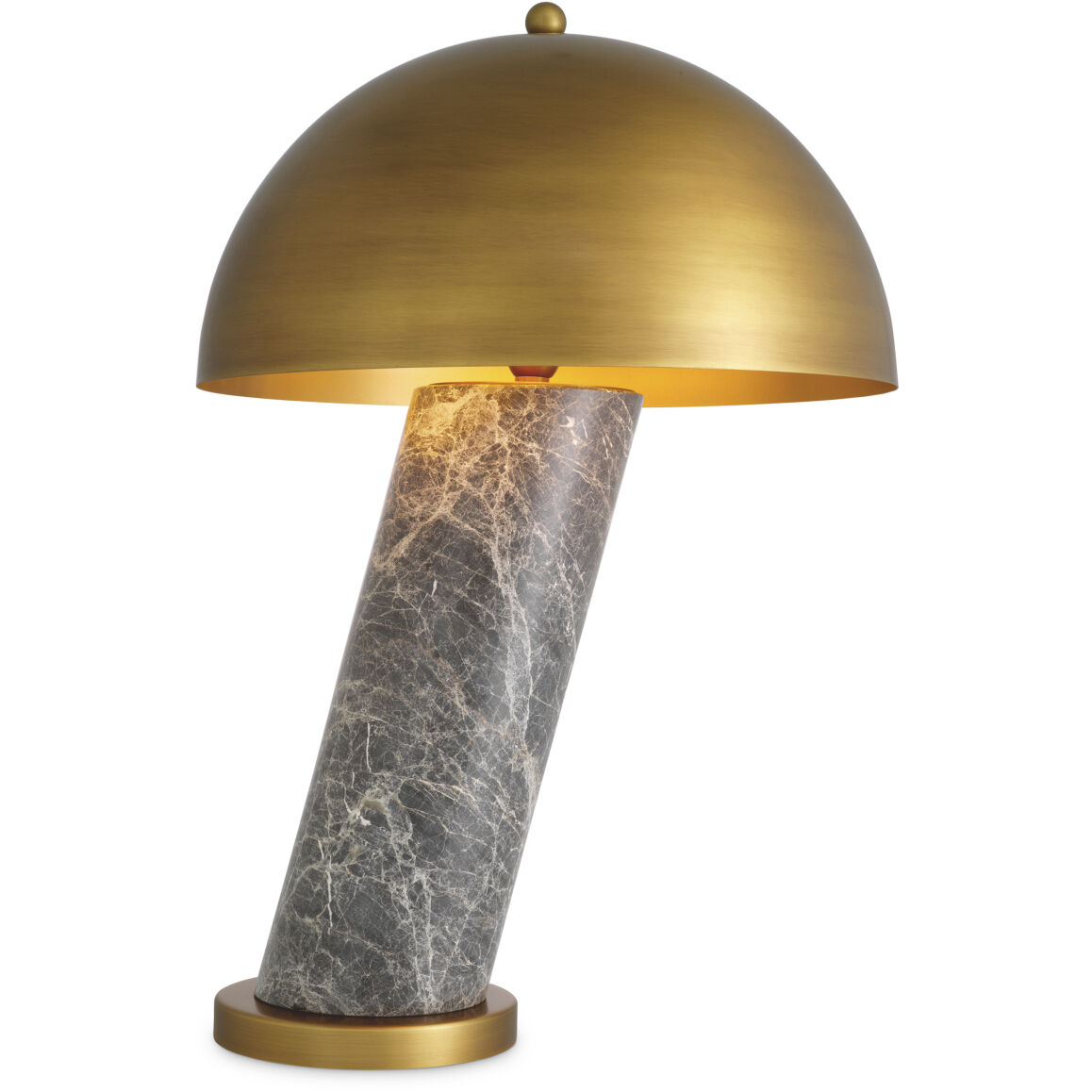
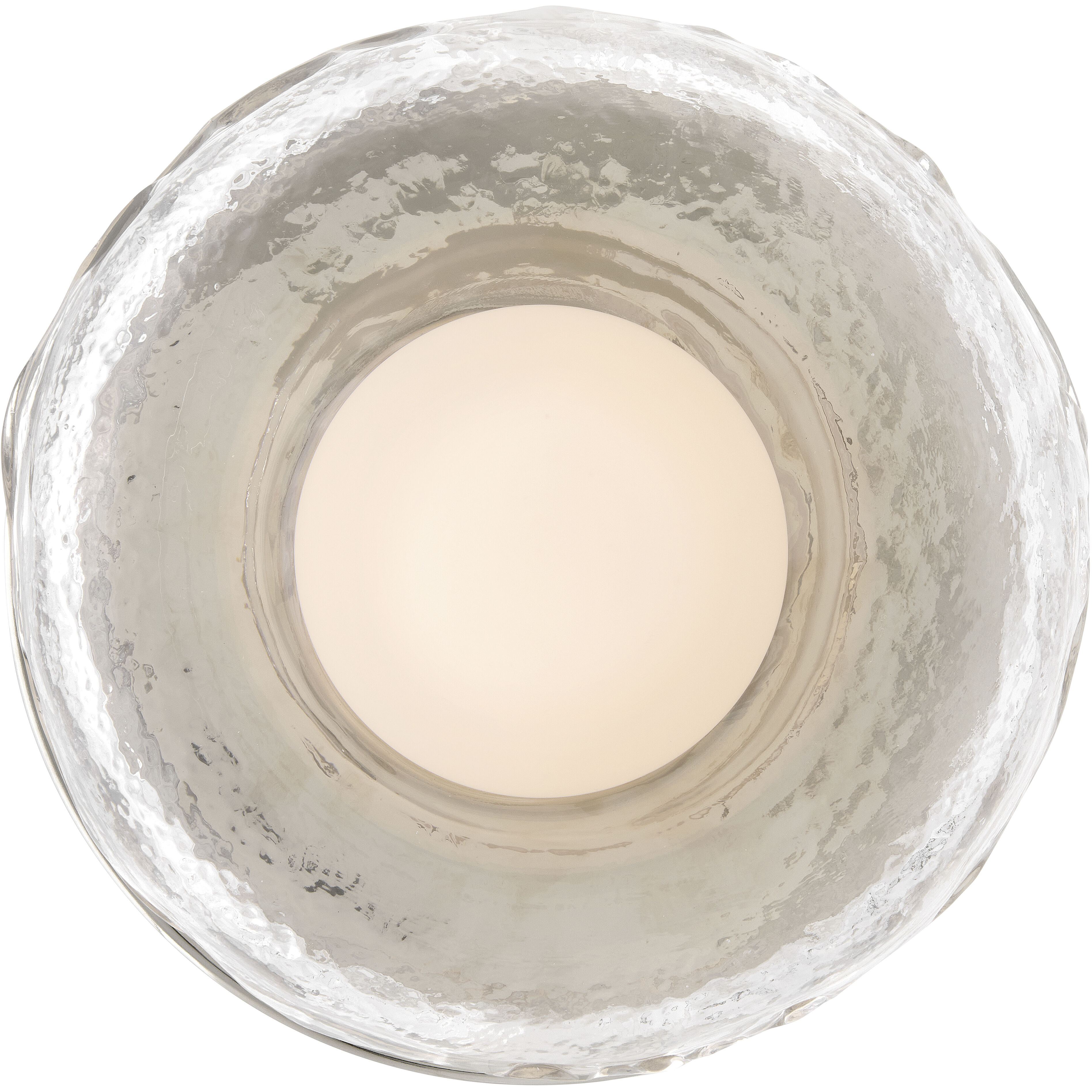
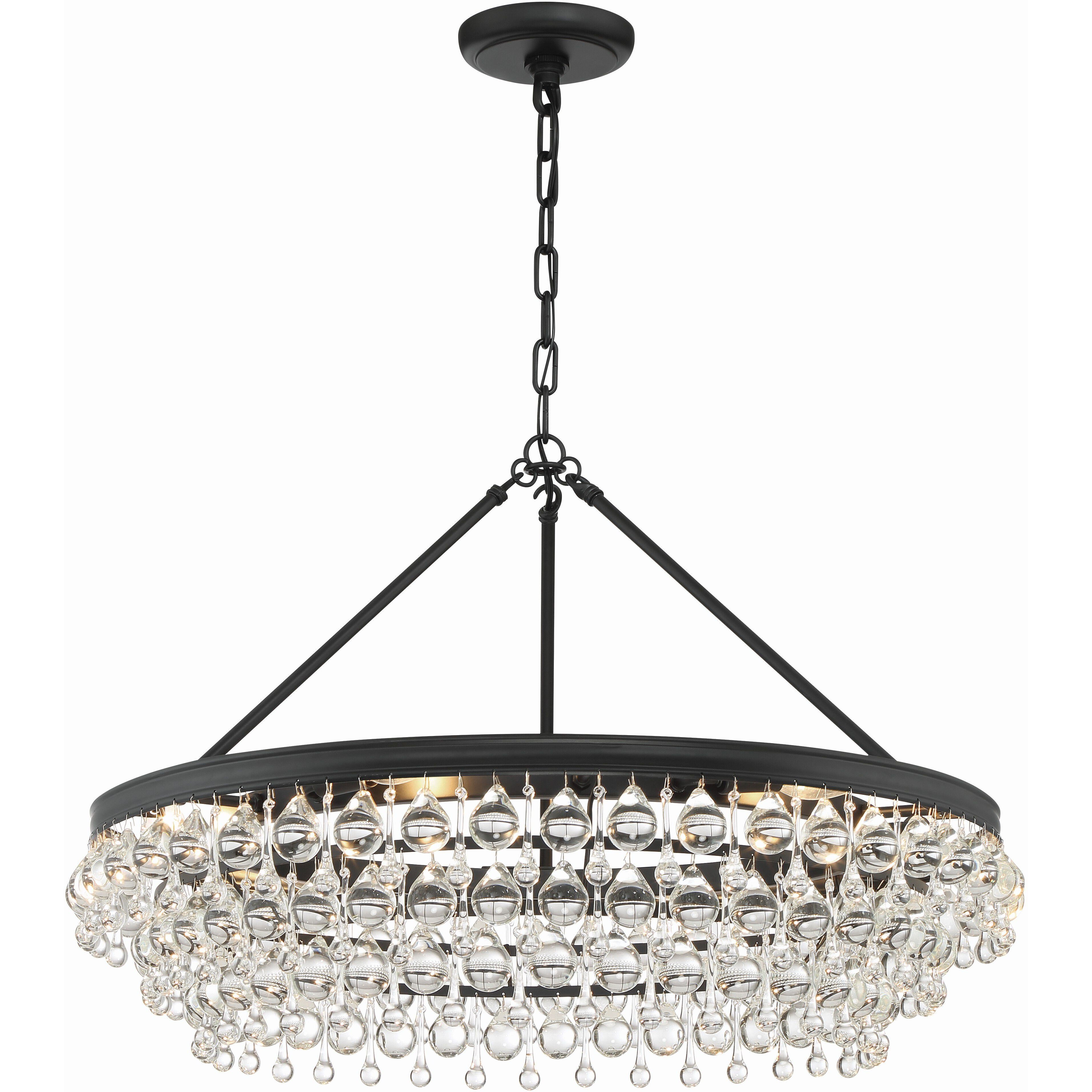


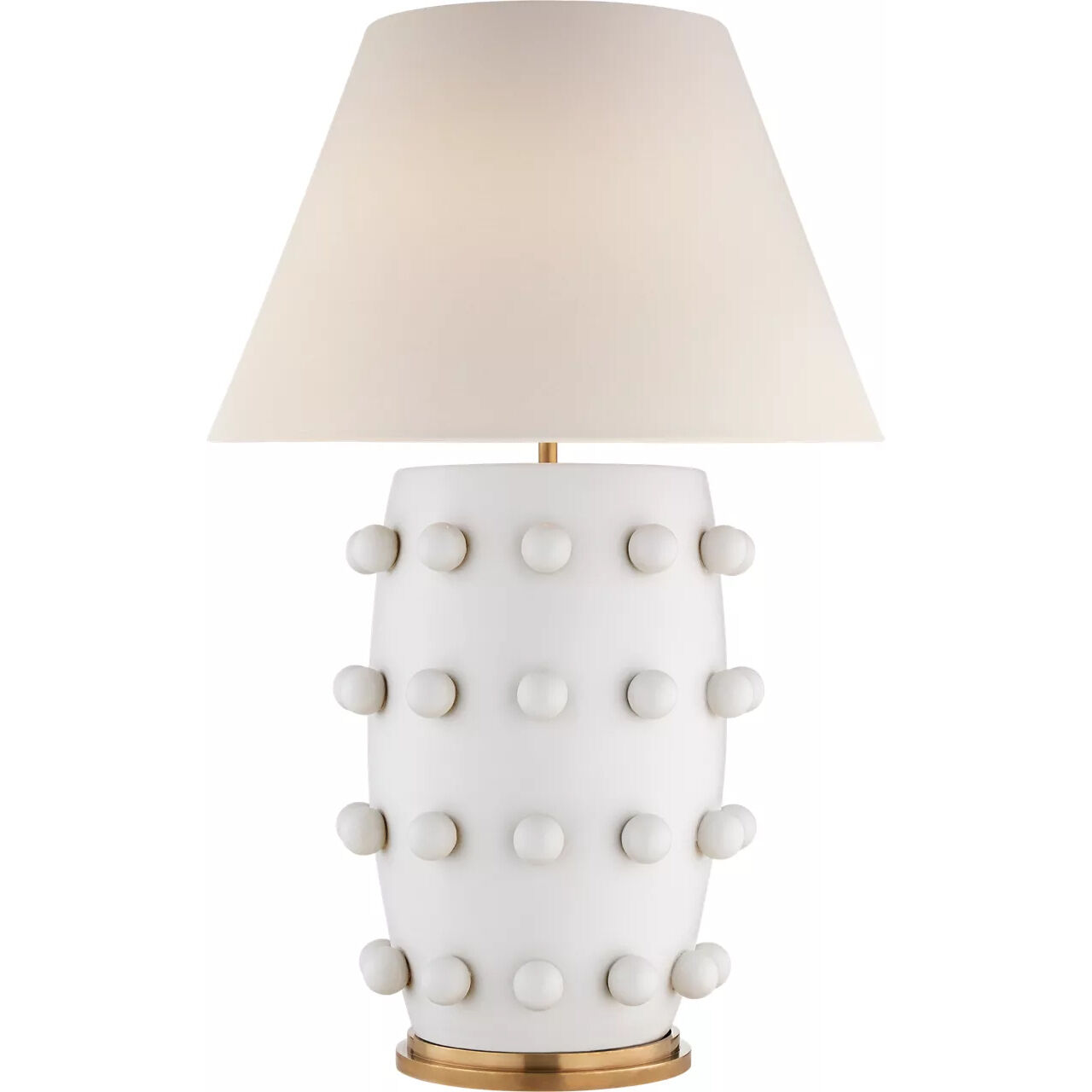


Discover Entertaining Layers

WAC Lighting

WAC Lighting

Justice Design


WAC Lighting

Justice Design

Justice Design

Justice Design

Justice Design


Justice Design

Innovations Lighting

WAC Lighting

WAC Lighting

Justice Design

Justice Design

Justice Design

Arroyo Craftsman

Arroyo Craftsman
Justice Design

Justice Design

WAC Lighting

Robert Abbey