


How to Streamline Your 2026 Lighting Workflow
Faster Specs, Fewer Errors, Happier Clients

If lighting feels harder than it should, you’re not imagining it.
In 2026, designers are juggling more fixtures, more SKUs, more client input, and more moving parts than ever before. One lighting plan can involve dozens—or hundreds—of decisions. And when something changes, everything else seems to ripple outward.
The result?
- Specs take too long
- Errors sneak in
- Clients get confused
- Backorders derail timelines
- Designers feel buried in details
But here’s the truth: lighting doesn’t have to be chaotic.
The most successful designers in 2026 aren’t working harder. They’re working with better systems. This article shows you how to streamline your lighting workflow so you can spec faster, reduce mistakes, and deliver a smoother experience your clients truly appreciate.
Think of your lighting workflow like a kitchen during dinner service. Without a system, it’s frantic. With one, everything flows—even under pressure.
Let’s build that system.
Why Lighting Workflow Is Breaking Down in 2026
Designers face a perfect storm:
Thousands of fixture options
Online pricing transparency
Constant client revisions
Supply chain variability
Tight project timelines
More coordination with trades
Lighting is no longer a “pick it at the end” category. It touches:
Electrical plans
Budgets
Lead times
Install schedules
Client satisfaction
Without structure, it becomes the bottleneck. Streamlining your workflow isn’t about cutting corners. It’s about removing friction.
The Core Principle of a Streamlined Lighting Workflow
Before tools, spreadsheets, or templates, you need one mindset shift: Lighting decisions should move forward—not bounce around.
Every streamlined workflow has three goals:
1. Reduce decision fatigue
2. Lock decisions earlier
3. Control changes instead of reacting to them
Everything that follows supports those goals.

Step 1: Start Lighting Earlier Than You Think You Should
One of the biggest workflow mistakes designers make is waiting too long to start lighting. In 2026, lighting should begin:
- During early design development
- Alongside layout and ceiling planning
- Before electrical rough-in
Why?
- Early decisions reduce last-minute pressure
- Availability issues surface sooner
- Budgets stabilize faster
Pro Insight: Late lighting decisions cause rushed specs—and rushed specs cause errors.

Step 2: Narrow Options Before Clients Ever See Them
Clients don’t want unlimited choice. They want guidance. A streamlined workflow limits options before presentation.
Best Practice:
- Present 2–3 curated fixture options per location
- Avoid open-ended browsing
- Show options that already fit:
- Budget
- Style
- Scale
- Lead time
When clients choose from curated options, approvals come faster and confidence rises.

Step 3: Build a Standard Lighting Framework You Reuse
The fastest designers aren’t reinventing the wheel on every project. They reuse:
- Standard color temperatures
- Preferred fixture categories
- Trusted brands
- Consistent layering strategies
Example Framework:
- Living rooms: layered ambient + lamps + accent
- Kitchens: recessed + pendants + under-cabinet
- Bedrooms: soft ambient + bedside task
This doesn’t limit creativity—it frees it.
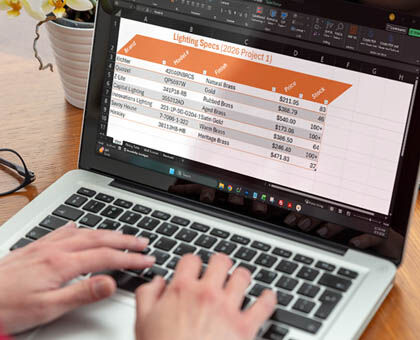
Step 4: Centralize Your Lighting Information
Scattered lighting details are a recipe for mistakes. A streamlined workflow uses one central source of truth for:
- Fixture selections
- Model numbers
- Finishes
- Quantities
- Locations
- Lead times
Whether it’s a spreadsheet, project management tool, or shared document, everything should live in one place. If it’s in five emails, three PDFs, and two texts—it will go wrong.
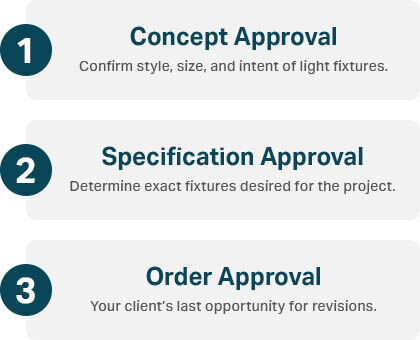
Step 5: Lock Decisions in Phases (Not All at Once)
Clients often change their minds—not because they’re difficult, but because decisions weren’t structured.
A Better Approach - Break lighting approvals into phases:
- Concept approval (style, scale, intent)
- Specification approval (exact fixtures)
- Order approval (final confirmation)
Each phase narrows flexibility—but increases clarity. This prevents endless back-and-forth.

Step 6: Always Have a Backup Fixture
Backorders and discontinuations are still part of 2026. The most streamlined workflows plan for change instead of reacting to it.
For every major fixture:
- Identify one comparable backup
- Match finish and scale
- Confirm availability
This saves days—or weeks—if something changes.

Step 7: Use Fewer SKUs Whenever Possible
Too many SKUs slow everything down:
- Ordering
- Tracking
- Installation
- Troubleshooting
Streamlining Tip:
- Use the same fixture across multiple rooms when appropriate
- Repeat finishes intentionally
- Standardize recessed lighting models
Clients rarely notice repetition—but they do notice delays.

Step 8: Build Change Control Into Your Process
Changes aren’t the problem. Uncontrolled changes are. A streamlined workflow makes changes:
- Visible
- Intentional
- Documented
Best Practice - When a client wants a change:
- Confirm the impact on cost and timeline
- Update the central spec document
- Reconfirm approval
This protects you and keeps expectations clear.

Step 9: Communicate Lighting Decisions to Trades Clearly
Even the best spec fails if it’s not communicated well. Make sure electricians receive:
- Clear fixture schedules
- Mounting notes
- Dimming requirements
- Color temperature details
Ambiguity leads to callbacks. Clarity saves time and money.

Step 10: Partner With a Lighting Team That Supports Your Workflow
This is where many designers regain hours each week. The Lighting New York Pro Team supports streamlined workflows by helping designers:
- Curate fixture options
- Confirm availability early
- Suggest substitutions
- Reduce SKU overload
- Track orders
- Resolve issues quickly
You stay focused on design. We handle the complexity behind the scenes.
What a Streamlined Lighting Workflow Feels Like
When your workflow works, you’ll notice:
Faster specs
Fewer revisions
Less second-guessing
Calmer client conversations
More time for creative work
Lighting becomes a strength—not a stressor.
Lighting Workflow Is Like Traffic Flow
When lanes are clear and rules are known, traffic moves smoothly. When everyone improvises, everything slows down. A streamlined workflow doesn’t limit creativity—it removes friction so creativity can shine.
Frequently Asked Questions
Q: How early should lighting decisions start?
A: During early design development—before electrical rough-in.
Q: Should clients see every option?
A: No. Curated choices lead to faster, better decisions.
Q: How do I reduce lighting mistakes?
A: Centralize specs and limit SKUs.
Q: Are backup fixtures really necessary?
A: Yes. They save time when availability changes.
Q: How do I manage frequent client changes?
A: Use phased approvals and documented updates.
Q: What causes most lighting errors?
A: Scattered information and rushed decisions.
Q: Can streamlined workflows work on small projects?
A: Absolutely. They’re often even more valuable.
Q: Does streamlining reduce creativity?
A: No. It frees time for better design thinking.
Q: How do I keep electricians aligned?
A: Provide clear, consolidated fixture schedules.
Q: Can LNY Pro help improve my lighting workflow?
A: Yes. Workflow support is one of our biggest strengths.


Let Lighting New York Keep You on Track
You don’t need more hours. You need a better system—and the right partners.
The Lighting New York Pro Team helps designers:
Spec faster
Reduce errors
Manage changes
Navigate lead times
Deliver smoother client experiences
Contact LNY Pro today to streamline your lighting workflow and make 2026 your most efficient year yet.
Let’s turn lighting from a pain point into a competitive advantage.
Call 866-344-3875 today!