


How to Price Lighting Services Profitably in 2026
Markup Models, Fees, & Client Expectations

Designers entering 2026 are walking a tightrope. Clients are more budget-conscious. Material costs remain unpredictable. And thanks to online pricing transparency, clients feel more empowered than ever to question fees, markups, and value.
If you’ve ever thought:
- “Am I charging enough?”
- “How do I justify my lighting markup?”
- “Should I charge a design fee, a product fee, or both?”
You’re not alone. The truth is, lighting services are more valuable than ever—but only if they’re priced correctly. This guide walks you through how successful Pros are pricing lighting services in 2026 so they can stay profitable and maintain client trust.
Think of pricing like the foundation of a home. If it’s shaky, everything above it is at risk. But when pricing is solid and intentional, your entire business feels more stable. Let’s build that foundation.
Why Lighting Pricing Is Harder (& More Important) in 2026
Lighting has changed and so have client expectations. In 2026, clients:
Can Google fixture prices in seconds
Compare online retailers instantly
Expect professional guidance and transparency
Want premium results on controlled budgets
At the same time, designers are expected to:
Manage lead times
Handle substitutions
Coordinate finishes
Prevent costly mistakes
Deliver beautiful results
That work has real value—and it deserves to be paid for clearly and confidently.
The Three Core Pricing Models for Lighting Services
There is no single “right” way to price lighting. But in 2026, profitable designers typically use one of three models—or a combination of them.
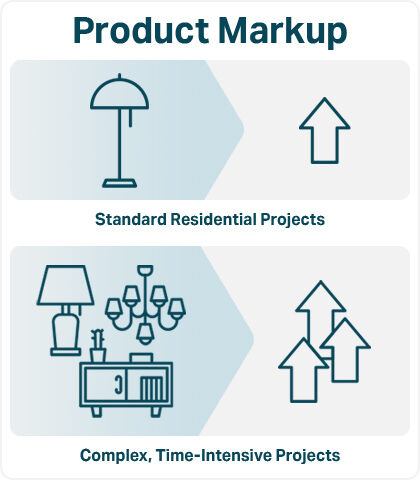
Model 1: Product Markup (Still Common, But Evolving)
This is the most familiar model. Designers earn by marking up lighting fixtures above their cost.
Typical Markups:
- 20%–40% for standard residential projects
- Higher for complex, time-intensive projects
Markup Pros:
- Simple to explain
- Easy to administer
- Scales with project size
Challenges in 2026:
- Clients can see online pricing
- Markups may be questioned
- Requires clear value explanation
How to Make Markup Work Today:
- Be transparent about what markup covers
- Tie markup to services provided (specs, coordination, ordering, troubleshooting)
- Avoid under-marking to “win” jobs—it erodes profitability fast
Markup still works—but only when paired with confidence and clarity.
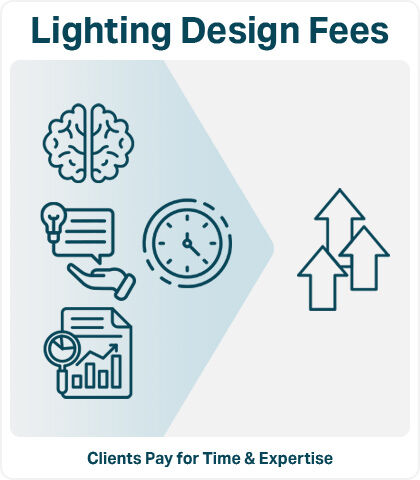
Model 2: Lighting Design Fees (Growing Rapidly)
More designers are charging separate lighting design fees in 2026—and for good reason.
What This Covers:
- Fixture selection
- Layout planning
- Layering strategy
- Coordination with electrical plans
- Revisions and client meetings
Fee Structures:
- Flat fee per room or project
- Hourly rate
- Percentage of project cost
Why This Model Works: Clients pay for expertise, not just products. And designers get paid even if products change. This model reduces reliance on product markup alone and stabilizes income.
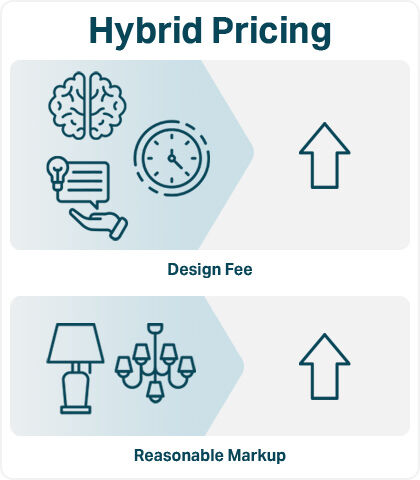
Model 3: Hybrid Pricing (The Most Sustainable Option)
The most successful Pros in 2026 use a hybrid model:
- Design fee for expertise and planning
- Reasonable markup for procurement and management
This approach:
- Balances transparency
- Protects profitability
- Feels fair to clients
- Reflects the full scope of work
Think of it like hiring an architect: clients expect to pay for the plan and the execution.

How to Explain Your Lighting Pricing to Clients
Pricing problems usually aren’t pricing problems—they’re communication problems. Clients are far more accepting of fees when they understand what they’re paying for.
Instead of Saying: “There’s a markup on the fixtures.”
Try This: “My lighting pricing includes design expertise, fixture coordination, lead-time management, substitutions if needed, and ensuring everything works together as planned.”
When clients understand the service behind the price, resistance drops.
What Designers Should Stop Undercharging For in 2026
Many designers give away valuable services without realizing it. In 2026, you should be compensated for:
Lighting revisions
Fixture comparisons
Finish coordination
Lead-time checks
Backorder management
Substitutions
Order tracking
Problem resolution
These aren’t “extras.” They are core professional services.

How to Handle Online Price Comparisons Gracefully
Clients will compare prices online. That’s normal. The key is how you respond.
What Not to Do:
- Get defensive
- Slash prices immediately
- Undervalue your work
What Works Better: Explain the difference between buying a fixture and designing, managing, and delivering a complete lighting solution
A simple analogy helps: “Buying lighting online is like buying ingredients. Hiring me ensures the recipe actually works.”

Setting Client Expectations Early Prevents Pricing Conflicts
Most pricing issues happen because expectations weren’t set early enough. Before starting lighting design, clearly explain:
- How pricing works
- What’s included
- How changes affect cost
- What services are covered
When expectations are clear, pricing conversations feel professional—not personal.

Why Profitable Pricing Builds Better Client Relationships
Underpricing doesn’t help clients—it hurts everyone. When designers undercharge:
- Stress increases
- Shortcuts happen
- Mistakes rise
- Burnout grows
Profitable pricing allows you to:
- Be more responsive
- Spend more time on quality
- Handle issues calmly
- Deliver better results
Clients don’t want the cheapest designer. They want the one who gets it right.
How LNY Pro Supports Profitable Lighting Pricing
Lighting New York’s Pro Team helps designers price lighting services with confidence by providing:
Transparent pricing support
Product comparisons
Lead-time clarity
Substitution options
Procurement assistance
Reduced admin workload
When your backend is strong, your pricing strategy becomes easier to defend—and easier to scale.
Lighting Pricing Is Like Setting Your GPS
If your pricing is off by just a little at the start, you’ll end up far from where you wanted to go. But when you set it intentionally—based on value, expertise, and reality—you arrive at profitable, sustainable growth.
Frequently Asked Questions
Q: Should I still use markup in 2026?
A: Yes—but ideally as part of a hybrid model.
Q: Do clients accept lighting design fees?
A: Yes, when the value is explained clearly.
Q: What’s a fair markup range?
A: Typically 20%–40%, depending on scope and complexity.
Q: How do I handle clients who want to buy fixtures themselves?
A: Charge design and coordination fees separately.
Q: Should I disclose my exact markup?
A: You should be transparent about what it covers, even if not itemized.
Q: Is hourly pricing a good option?
A: It can work, but many designers prefer flat or hybrid fees for predictability.
Q: How do I avoid pricing disputes later?
A: Set expectations early and put them in writing.
Q: Can pricing affect perceived value?
A: Absolutely. Underpricing can reduce trust.
Q: Can pricing affect perceived value?
A: Absolutely. Underpricing can reduce trust.
Q: How does LNY Pro help with pricing confidence?
A: By reducing uncertainty around availability, substitutions, and logistics.


Want Help Pricing Lighting Services With Confidence in 2026?
You don’t need to guess. And you don’t need to race to the bottom.
The Lighting New York Pro Team partners with designers every day to help them:
Build profitable lighting strategies
Manage pricing conversations
Reduce administrative burden
Deliver better results with less stress
Contact LNY Pro today to get expert support on lighting pricing, procurement, and project success in 2026.
We’ll help you charge confidently—for the value you truly provide.
Call 866-344-3875 today!