


The Designer’s Guide to Proper Chandelier Sizing
(With Real Formulas)
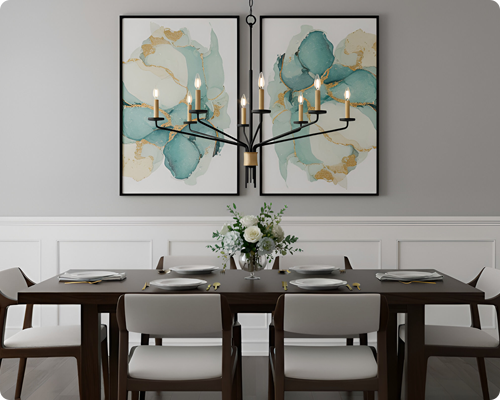
Few things elevate a room faster than a beautiful chandelier. It adds light, style, and a sense of occasion. But when the size is wrong, the effect can fall flat.
Designers see this mistake often. A chandelier that is too small can disappear into the room like a button on an oversized coat. One that is too large can overwhelm the space and make the ceiling feel heavy. The good news is that choosing the right size is not guesswork. Designers use a few simple formulas to guide their decisions. When you follow these rules, chandeliers tend to look balanced and intentional.
In this guide, we’ll walk through practical chandelier sizing formulas for dining tables, foyers, bedrooms, and two-story entryways. If you’ve ever wondered, How big should this fixture really be? you’re in the right place.
Why Chandelier Size Matters
Lighting plays two roles in a room. It provides illumination, and it helps shape the design. A chandelier sits at the center of that balance.
If the fixture is sized correctly, it anchors the room. It draws the eye upward and creates a focal point that feels natural. But if the scale is off, the room can feel awkward, even if everything else looks right.
Think of a chandelier like a painting above a fireplace. If the artwork is too small, the wall feels empty. If it’s too large, the wall feels crowded. The goal is to find the sweet spot where everything feels proportionate.
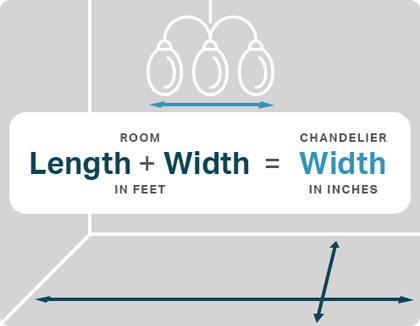
The Basic Room Size Formula
Before diving into specific rooms, designers often start with a simple guideline:
Add the room’s length and width in feet. The total equals the ideal chandelier diameter in inches.
For example:
- A room that is 12 feet by 14 feet equals 26.
- A chandelier around 26 inches wide will typically look balanced.
This rule works well for living rooms, bedrooms, and other open areas. It’s not the only factor to consider, but it gives designers a reliable starting point.
Chandelier Sizing for Dining Tables
Dining rooms are one of the most common places for chandeliers. The fixture becomes the visual centerpiece of the room, sitting directly above the table.
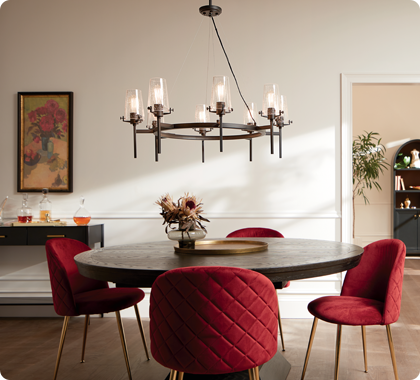
The Dining Table Formula
A widely used rule is: The chandelier should be about one-half to two-thirds the width of the dining table.
For example: A table that is 48 inches wide works well with a chandelier between 24 and 32 inches wide.
This keeps the fixture proportional without overpowering the table.
Hanging Height Above the Table
Height also matters. A practical guideline is: Hang the chandelier 30–36 inches above the table surface.
If the ceiling is higher than 8 feet, the fixture can be raised slightly. This height allows the chandelier to feel connected to the table while still leaving room for conversation.
Chandelier Sizing for Foyers
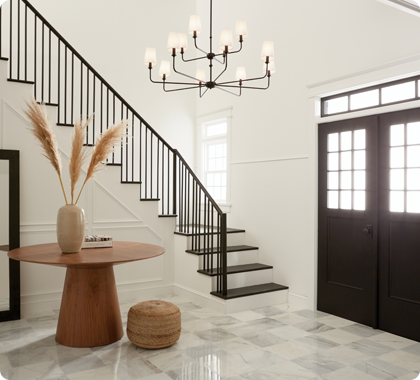
The foyer sets the tone for the entire home. When guests step inside, the lighting often becomes the first design element they notice. Because entryways vary widely in size, designers often rely on room dimensions to guide chandelier selection.
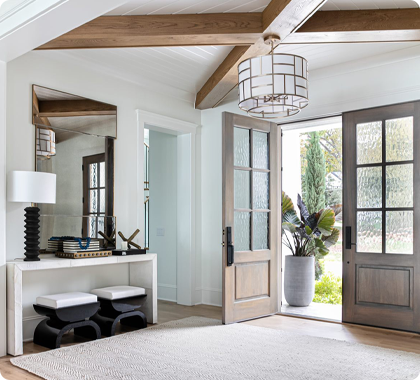
The Foyer Formula
Use the basic room formula: Add the room’s length and width (in feet) to determine the chandelier diameter in inches.
For example:
- A foyer measuring 10 feet by 12 feet equals 22.
- A chandelier around 22 inches wide will likely feel balanced.
This rule helps maintain proper scale within the space.
Height Considerations
For ceilings that are 8 feet tall, the bottom of the chandelier should hang about 7 feet above the floor. This ensures there is enough clearance while keeping the fixture visually connected to the room.
Chandelier Sizing for Bedrooms
Bedrooms often benefit from softer lighting and a sense of comfort. A chandelier can add personality without feeling too formal. Many designers place chandeliers either in the center of the room or directly above the bed.

Bedroom Size Formula
Use the same room formula: Add the room’s length and width in feet to determine the chandelier diameter in inches.
For example:
- A bedroom measuring 14 feet by 16 feet equals 30.
- A chandelier around 30 inches wide typically works well.
Placement Above the Bed
If the chandelier is centered over the bed, designers usually ensure the fixture does not hang too low. A common guideline is to keep the bottom of the chandelier at least 7 feet above the floor. This keeps the fixture safe while still creating visual impact.
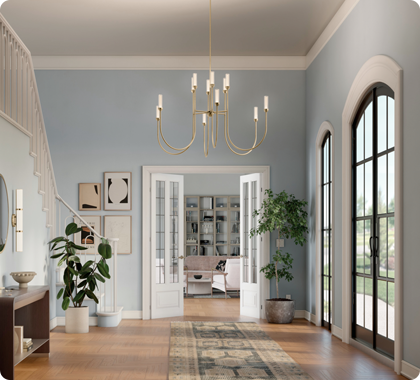
Chandelier Sizing for Two-Story Entryways
Two-story entryways present a unique opportunity. The extra vertical space allows for dramatic fixtures that would overwhelm smaller rooms. Designers often choose chandeliers that emphasize height.
The Two-Story Entry Rule
A common approach is to size the chandelier based on ceiling height.
For example: For every foot of ceiling height, allow 2.5 to 3 inches of chandelier height.
So if a foyer ceiling is 18 feet high, a chandelier between 45 and 54 inches tall may work well. This helps the fixture feel appropriately scaled to the vertical space.
Placement in the Entryway
Many designers center the chandelier so it aligns visually with the front door or staircase. In homes with staircases, the chandelier often hangs in a position that is visible from both levels.
Avoiding Common Chandelier Sizing Mistakes
Even experienced designers sometimes encounter sizing challenges. A few simple reminders can help prevent common problems.
Choosing Fixtures That Are Too Small
This is the most frequent mistake. Designers sometimes underestimate how large a chandelier should be. In most cases, a slightly larger fixture will look better than one that feels undersized.

Ignoring Ceiling Height
Tall ceilings can handle larger fixtures. A small chandelier in a room with high ceilings often looks lost.

Overcrowding the Space
While larger fixtures often work well, there still needs to be breathing room around them. A chandelier should complement the room—not dominate it.
Why Proper Sizing Makes a Difference
A correctly sized chandelier does more than illuminate a room. It helps the space feel balanced. When the proportions are right, the fixture looks intentional. The room feels thoughtfully designed.
For designers and builders, that sense of balance matters. It’s one of the details that separates an ordinary room from one that feels polished and complete.
Frequently Asked Questions
Q: How do designers determine chandelier size?
A: Designers often add the room’s length and width in feet to determine the ideal chandelier diameter in inches.
Q: How large should a dining room chandelier be?
A: Most dining room chandeliers should measure about one-half to two-thirds the width of the dining table.
Q: What height should a chandelier hang above a dining table?
A: A typical guideline is 30–36 inches above the table surface.
Q: Can a chandelier be too large for a room?
A: Yes. Oversized fixtures can overwhelm a space if they do not match the room’s scale.
Q: What is the most common chandelier sizing mistake?
A: Choosing fixtures that are too small is the most common issue.
Q: How do you size a chandelier for a bedroom?
A: Use the room formula: add the room’s length and width in feet to determine the chandelier diameter in inches.
Q: Are chandeliers appropriate for bedrooms?
A: Yes. Many designers use chandeliers to add elegance and personality to bedrooms.
Q: How large should a chandelier be for a foyer?
A: The room size formula works well for foyers. Add the room’s length and width in feet to determine the fixture diameter in inches.
Q: What size chandelier works best for a two-story entryway?
A: The chandelier height often equals about 2.5 to 3 inches for each foot of ceiling height.
Q: Should chandelier size match the room or the furniture?
A: Both matter. Designers consider room size, ceiling height, and the furniture below the fixture.
Let Lighting New York Help You Find the Perfect Fit
Choosing the right chandelier size can make a remarkable difference in how a room feels. When the proportions are right, the lighting becomes a natural focal point that enhances the entire space.
If you’re planning a project and want guidance selecting the right chandelier for your space, the professionals at Lighting New York are here to help. Our lighting experts work with designers, builders, and homeowners every day to choose fixtures that balance scale, style, and performance.
Whether you’re designing a dining room, foyer, bedroom, or grand entryway, Lighting New York can help you find the perfect chandelier for your project and bring your vision to life.
Call 866.344.3875 today!